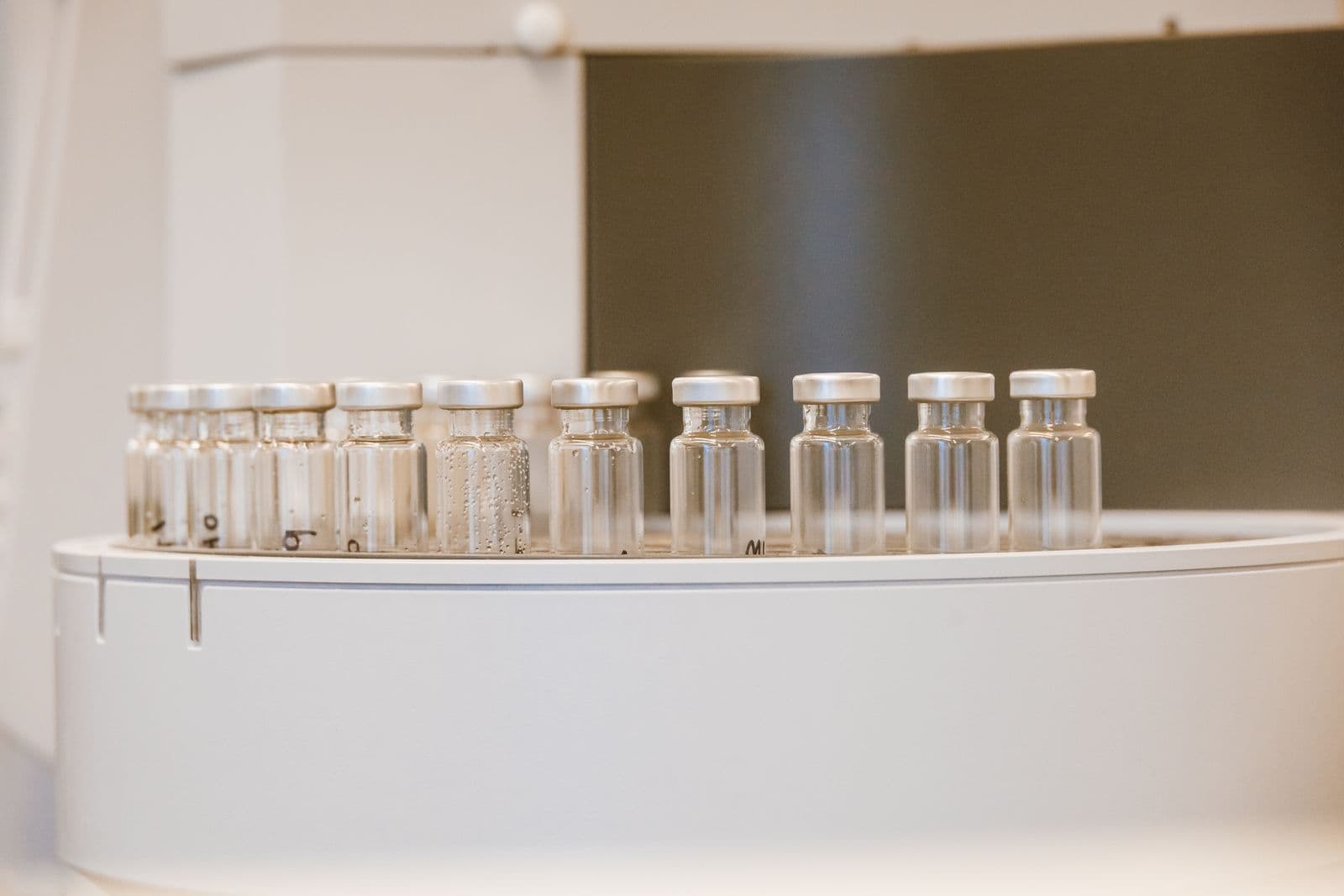
PlatinumLongevity.co sells Melanotan II for laboratory research use only. This page summarizes the published literature. It is not guidance for human use.
What it is
Melanotan II, often written MT-II, is a synthetic cyclic heptapeptide. It is an analog of alpha-melanocyte stimulating hormone, a natural hormone that drives skin pigmentation. A lactam bridge closes the ring. The published structure is Ac-Nle4-Asp5-His6-D-Phe7-Arg8-Trp9-Lys10 alpha-MSH(4-10)-NH2 (Dorr et al., 1996).
A 2006 review by University of Arizona authors describes MT-II as patented and tested clinically for erectile dysfunction (Hadley and Dorr, 2006).
PubChem lists the formula C50H69N15O9, a molecular weight of 1024.2 g/mol, and CAS number 121062-08-6 (PubChem).
What has been studied
The controlled human data come from three small studies in the 1990s and 2000. The later safety literature is mostly case reports.
| Study | Study type | Size |
|---|---|---|
| Dorr et al., 1996 | Human pilot phase I, single-blind, placebo-controlled | 3 men |
| Wessells et al., 1998 | Human, double-blind, placebo-controlled crossover | 10 men |
| Wessells et al., 2000 | Human, double-blind, placebo-controlled crossover | 10 men |
| Burian and Jemec, 2019 | Review of published case reports | 179 patients, all causes |
Pigmentation
In the 1996 pilot, three healthy men received MT-II or saline on alternating days for two weeks. Two of the three showed increased pigmentation of the face, upper body, and buttocks. Side effects included mild nausea, stretching and yawning, and spontaneous erections. One man had grade II sleepiness and fatigue (Dorr et al., 1996).
Erectile function
The 1998 crossover enrolled ten men with erectile dysfunction of no known organic cause. Eight of ten developed erections on MT-II. Nausea, yawning, and lower appetite were more common than on placebo (Wessells et al., 1998).
The 2000 crossover enrolled ten men with organic risk factors. Erections followed 12 of 19 MT-II administrations, against 1 of 21 placebo administrations. Four of the 19 MT-II administrations were followed by severe nausea (Wessells et al., 2000).
A related approved drug
The 2006 review describes PT-141 as a newer MT-II analog (Hadley and Dorr, 2006). FDA identifies PT-141 as bremelanotide (FDA warning letter). Bremelanotide is approved by the FDA as Vyleesi for premenopausal women with acquired, generalized hypoactive sexual desire disorder. The Vyleesi label reports focal hyperpigmentation in 1% of patients (DailyMed). Vyleesi is a different molecule from MT-II.
Case reports on moles and melanoma
A 2019 review compiled 179 published cases of eruptive moles. Melanotan sat in one cause group with immunosuppressants and chemotherapy, which together made up 41% of cases. The authors said the data did not allow an estimate of cancer risk (Burian and Jemec, 2019).
Single-patient reports include an oral mucosal melanoma after MT-II nasal spray use (Yassin Alsabbagh et al., 2025). Another describes gum pigmentation that persisted three months after use stopped (Bonchev, 2026). A third describes five melanomas in situ in one person who also used tanning beds and anabolic hormones (Vadner and Smith, 2026).
Regulatory status in the US, October 2026
- FDA lists Melanotan II among substances whose nominations were withdrawn. FDA cites a possible immunogenicity risk from aggregation or peptide-related impurities (FDA).
- The same FDA page notes published case reports of serious adverse events. These include melanoma, posterior reversible encephalopathy syndrome, sympathomimetic toxidrome, and priapism.
- In April 2026, FDA removed Melanotan II and 11 other peptides from Category 2. Removal does not make a substance eligible for 503A compounding (Frier Levitt, April 2026).
- Melanotan II was not on the July 2026 advisory committee agenda. Frier Levitt reports a separate committee consultation is planned before the end of February 2027 (Frier Levitt, April 2026).
On August 24, 2026, FDA sent warning letters to sellers of "research use only" peptides. In one letter, FDA said website evidence showed the products were intended for human use, despite the labels (FDA warning letter). That letter named PT-141, not Melanotan II.
What is unknown or contested
- Cancer risk. Case reports cannot show cause. The 2019 review said its data did not permit a risk estimate. One 2026 case had tanning bed and hormone exposure as well.
- Trial size. The controlled human studies enrolled 3, 10, and 10 men. All three were published between 1996 and 2000.
- Long-term effects. The 2026 oral case report notes a lack of published data on how long oral pigment changes last.
- Product quality. FDA flags aggregation and peptide-related impurities as concerns.
Handling notes for a lab
Cayman Chemical supplies Melanotan II acetate as a crystalline solid. Its sheet lists storage at -20°C and stability of at least four years. It reports solubility in ethanol, DMSO, and DMF, and sparing solubility in aqueous buffers. Cayman does not recommend storing aqueous solutions for more than one day. The sheet labels the product for research only (Cayman Chemical).
Lot documentation and specifications are on the product page, Melanotan II at PlatinumLongevity.co.
Sources
- Dorr et al., Life Sciences, 1996
- PubChem, melanotan-II (CID 92432)
- Hadley and Dorr, Peptides, 2006
- Wessells et al., J Urol, 1998
- Wessells et al., Urology, 2000
- DailyMed, Vyleesi (bremelanotide) label
- Burian and Jemec, Am J Clin Dermatol, 2019
- Yassin Alsabbagh et al., Int J Oral Maxillofac Surg, 2025
- Bonchev, Life (Basel), 2026
- Vadner and Smith, JAAD Case Reports, 2026
- FDA, bulk drug substances that may present significant safety risks, 2026
- Frier Levitt, FDA peptide list update, April 2026
- FDA warning letter, NuScience Peptides LLC, August 2026
- Cayman Chemical, Melanotan II (acetate) product sheet
For laboratory research use only. Not for human or animal use. Nothing on this page is medical advice.